This past summer and autumn, I had the good fortune of seeing different types of wrens! You might be asking, what is a wren? Wren is a family of small brown birds with round bodies and a short tail that is typically held upright when they are hopping around. These little birds eat insects and some members of this family are known to be quite “chatty” with their noisy calls. The next question you might be asking is, where does one go to see a wren?
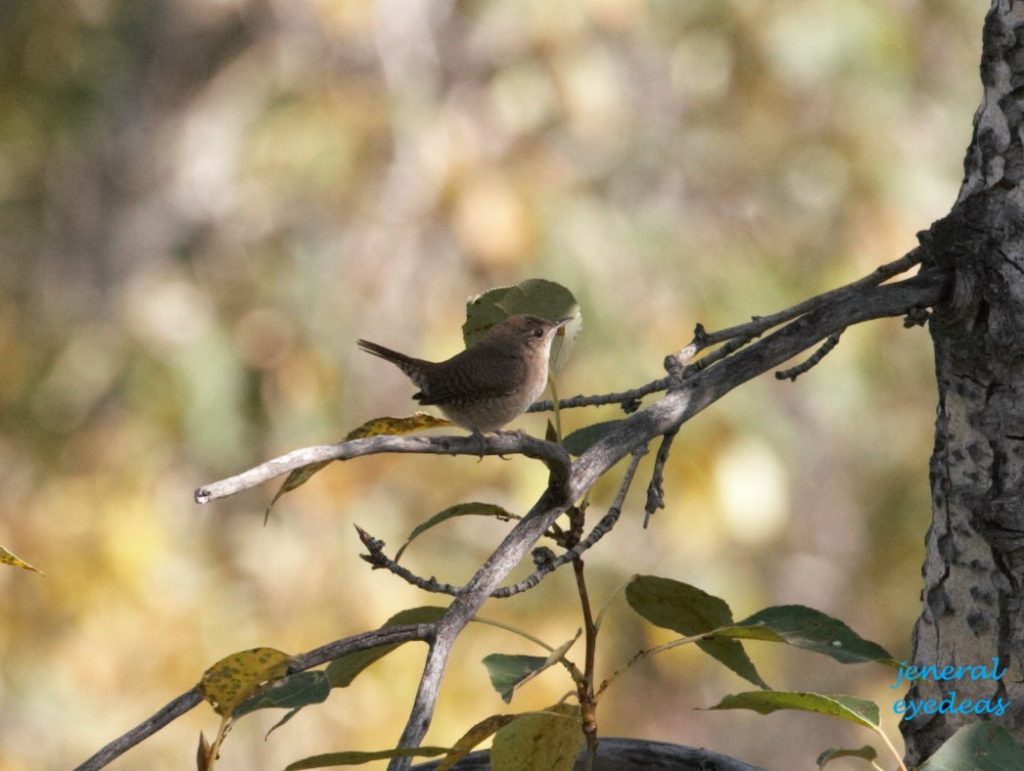
Each of my Wren encounters were in different environments. Throughout the summer, I heard the House Wren in different parks and in my neighborhood. The common theme in the aforementioned locations seems be trees and brush scattered among open spaces. These little birds seem very adaptable and resilient as All About Birds explains they live in a fairly large geographic region and can live in a variety of locations where there are trees, shrubs, and tangles of brush with spaces scattered in between. One characteristic of the House Wren that makes them quite memorable is their loud jumbled calls which seems disproportionate to their tiny size – they are about the size of a Black Capped Chickadee! During one of my volunteer shifts at a local park, a House Wren was calling non-stop in the trees for at least 90 minutes!
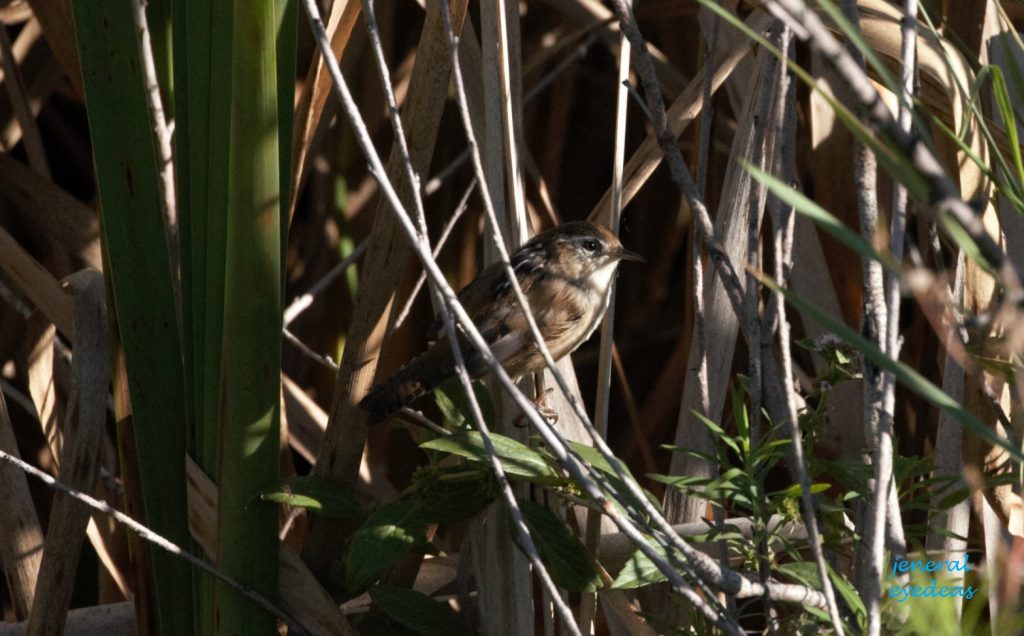
My second encounter with a member of the Wren family came early one morning when I went birding with my partner. As he was walking near the cattails by a nearby storm pond, he mentioned a bunch of noise coming from some tall grass nearby. We both looked closely at the area where the chatter was coming from and I saw a small brown bird hopping from stem to stem – a little Marsh Wren! All About Birds shares Marsh Wrens live near shallow bodies on water on land, otherwise known as wetlands, that are populated with vegetation including cattails, sedges, and phragmites. The vegetation provides a home for these little birds and a source of food – the leaves and stems have many insects and spiders. Marsh Wrens are very noisy, active birds and tend to hop from stem-to-stem stopping only for a second or two before hopping to another location. Their calls are quite distinct and are made up of a series of different buzzing, beeping, chipping sounds in rapid sequence.
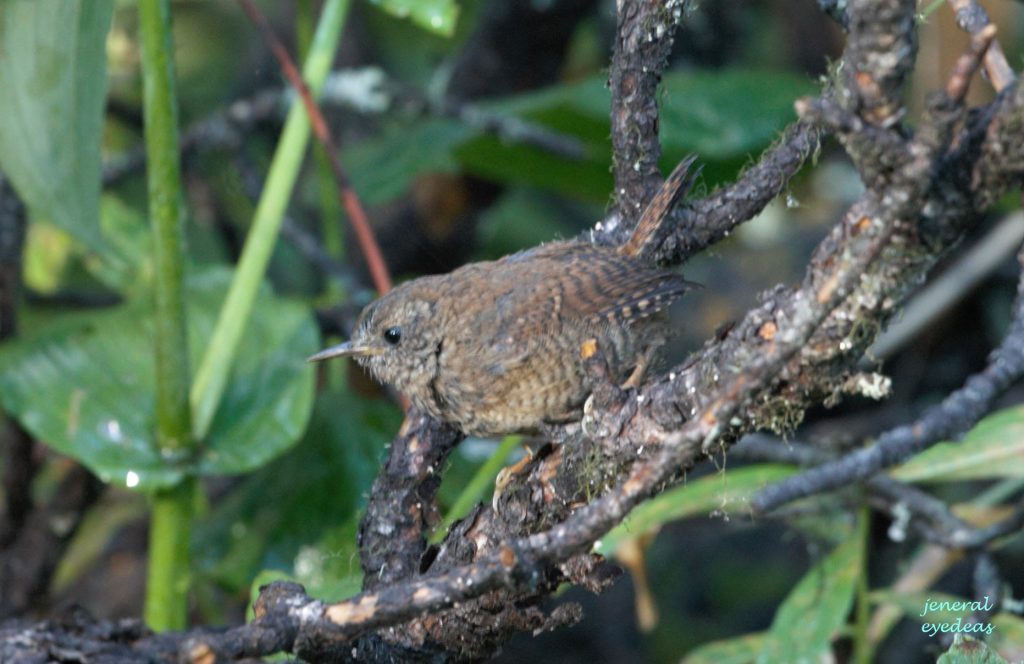
My last encounter came during a field trip with Nature Calgary. We birded in the day use area of West Bragg Creek. For the first part of the field trip, we did not see too many birds but we did see many mushrooms on the side of the path. We walked past some dead brush and logs on the side of the path and the field trip leader, Kaya, spotted movement among the intertangled stems. I looked through my binoculars to see a small brown bird hopping around among the dead vegetation – a Pacific Wren! All About Birds explains these small brown birds can be found in old growth coniferous forests, deciduous forests, and mixed coniferous and deciduous forests. Specifically, Pacific Wrens can be found in fallen logs, dead trees and stumps, brush piles, and in the underbrush cover of mosses and ferns.
Wrens are adorable little birds! As I look back at my pictures from my birding trips, I feel joy and remember fond memories of getting outside and seeing these little birds in three very different environments.
Leave a Reply