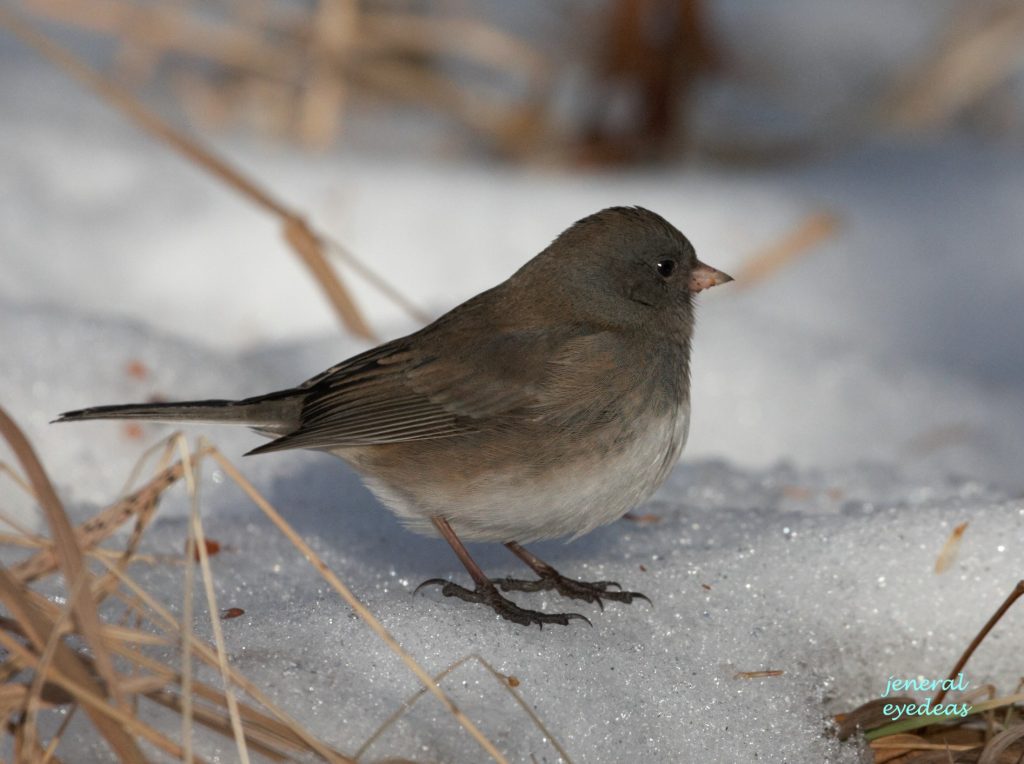
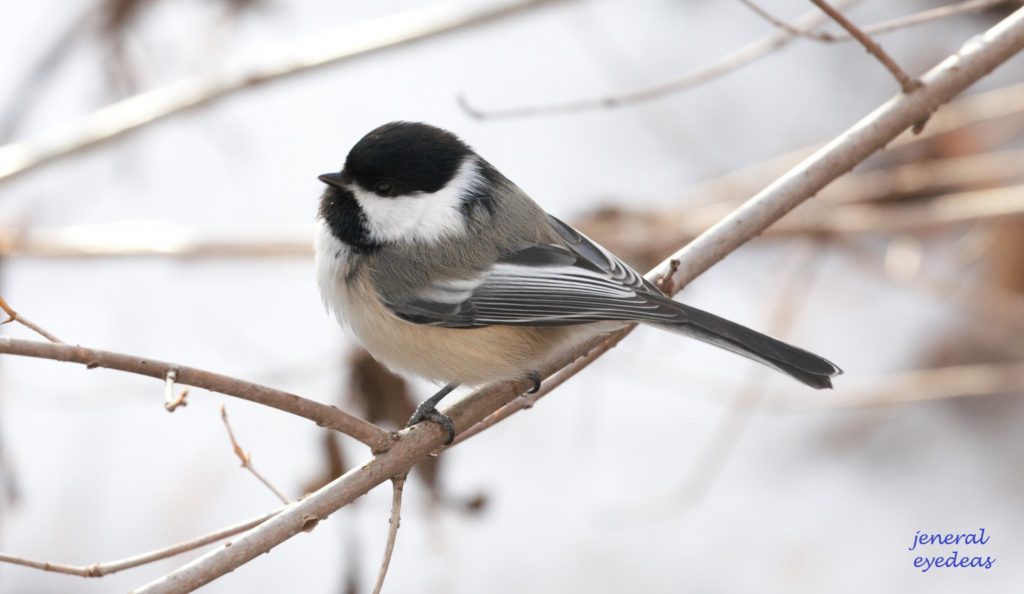
By mid-October, many of the migratory songbirds in my area are noticeably absent as I am surrounded by the red, orange, and golden hues of the season. The silence of the first snow fall arrives combined with the intermittent calls of birds who stay year round including Magpies, Crows, Black-capped Chickadees, Northern Flickers, Downy Woodpeckers, House Finches, Blue Jays, Dark-eyed Juncos, and many more.
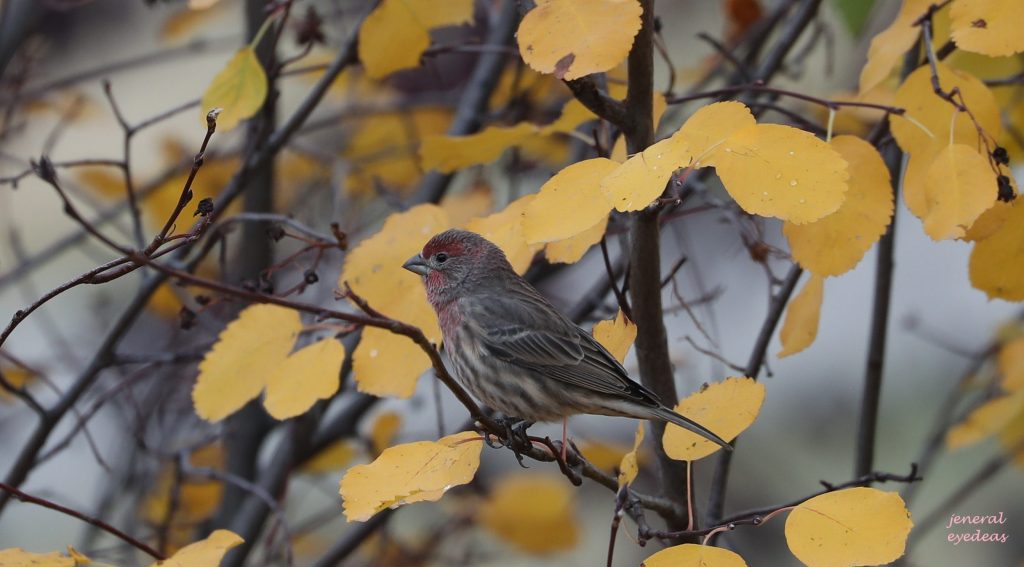
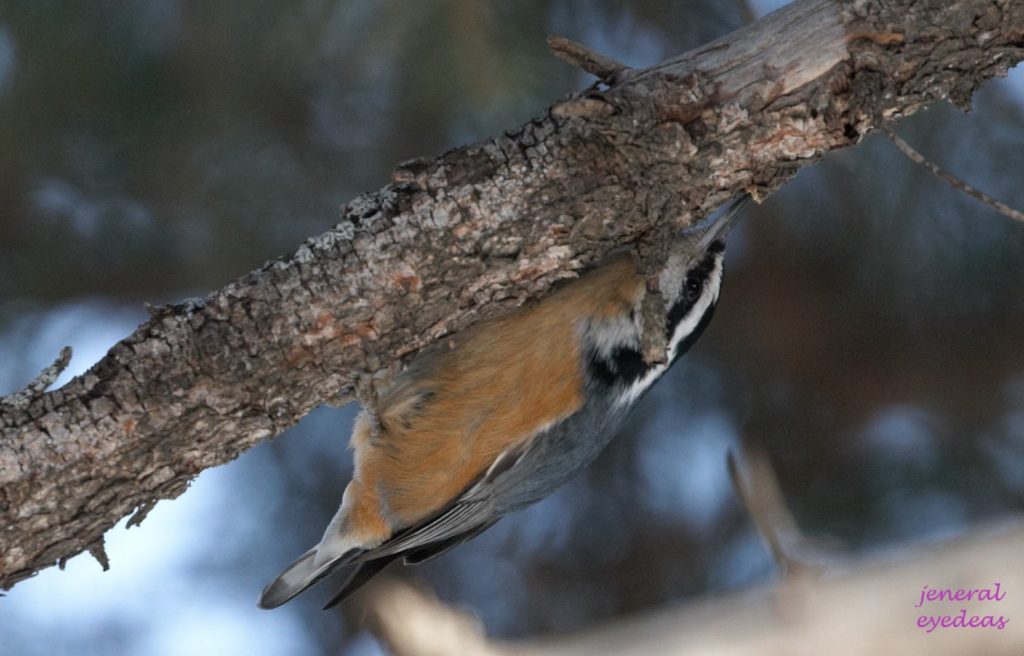
Very recently, I went birding in a nearby park that is becoming one of my favorite spots. It is a quiet space with a shallow stream surrounded by areas of dense tree coverage which our small feathered friends seem to feel safe in while foraging and frolicking. I saw the usual winter birds including the Dark-eyed Juncos, Red-Breasted Nuthatches, Magpies, and Black-capped Chickadees.
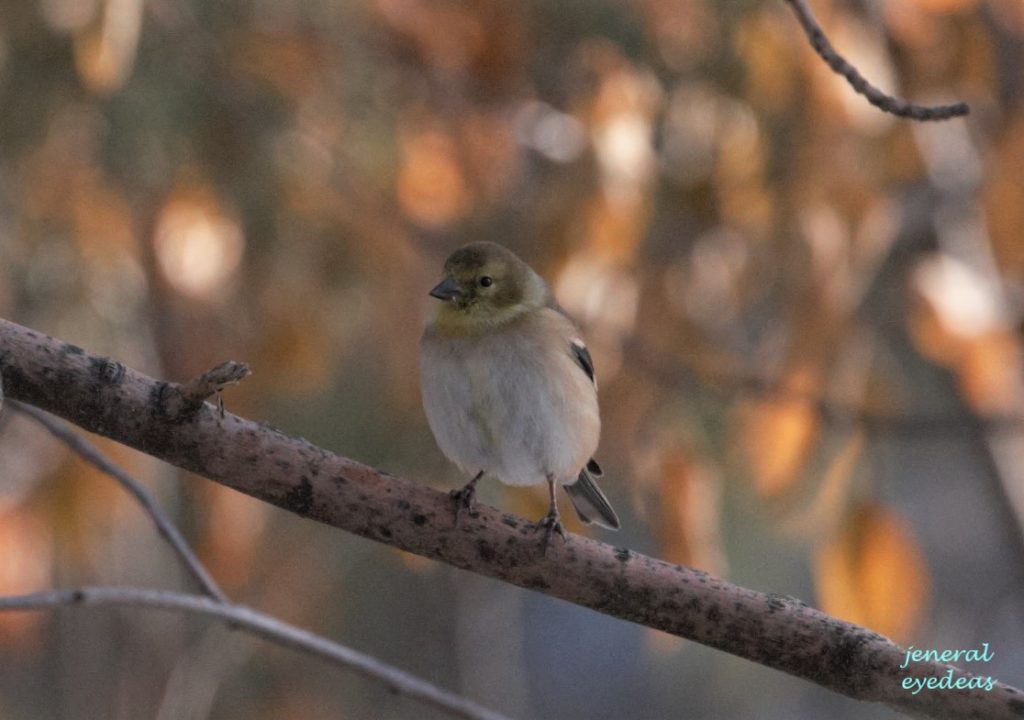
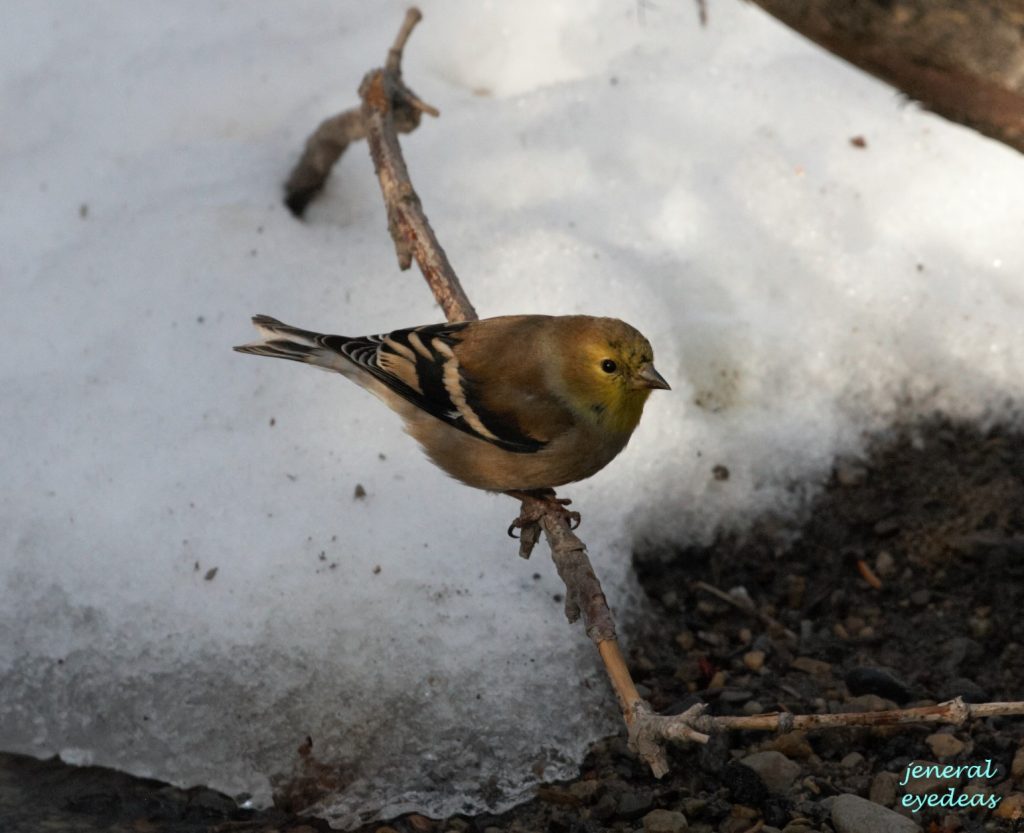
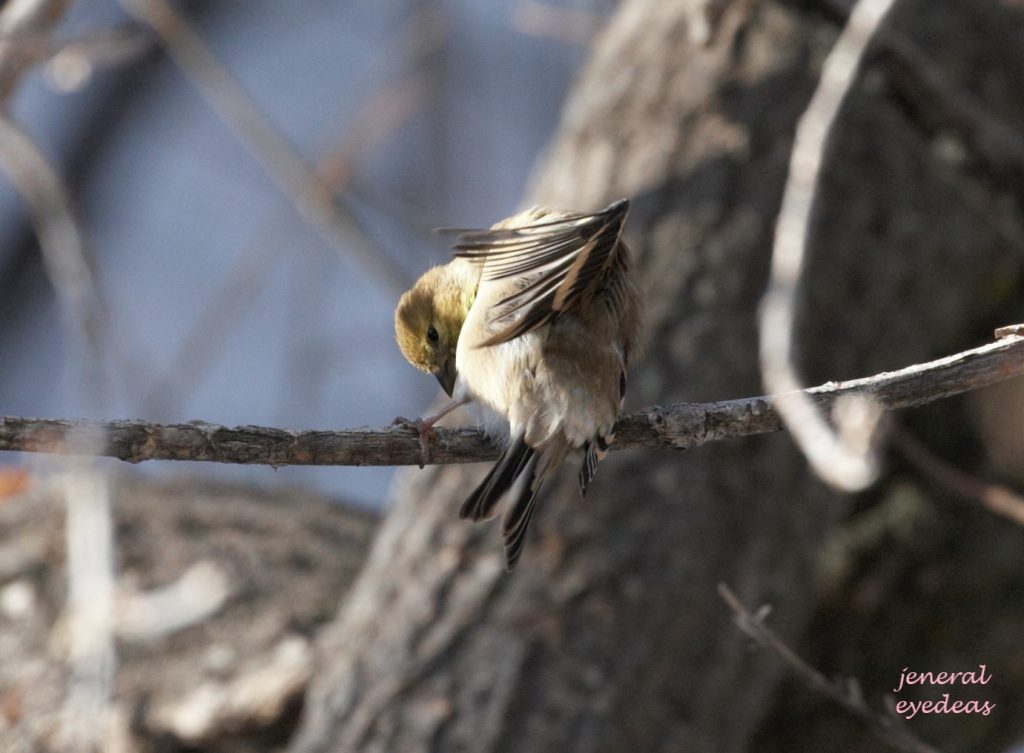
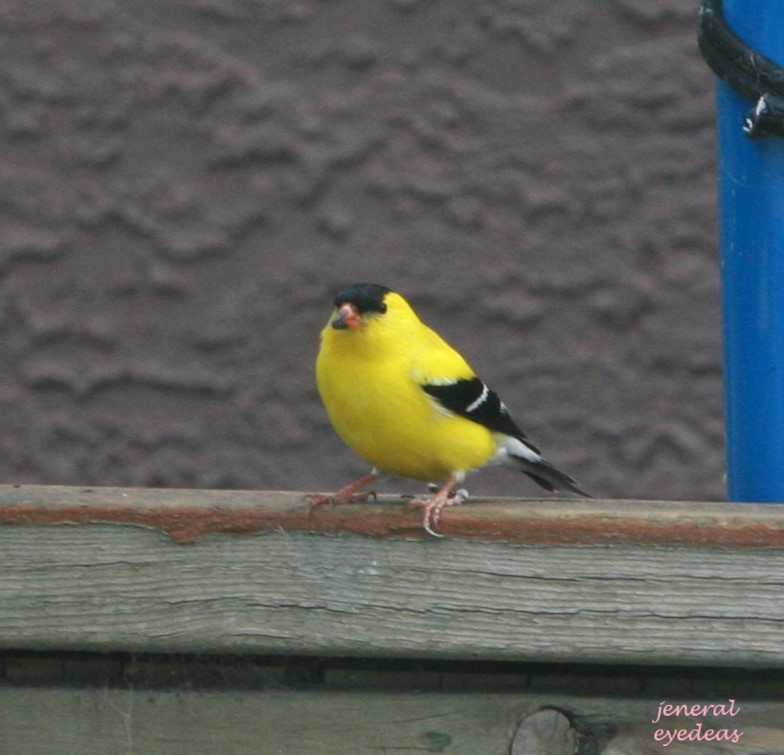
Continuing along the stream, I heard a very familiar flight call I would normally hear in June, “po-ta-to-chip…po-ta-to-chip…po-ta-to-chip…”. Looking up, I saw a small bird with soft yellow colors, an adult American Goldfinch in its winter plumage! A range map shared by All About Birds from Cornell University indicates this beautiful songbird is only in my area during its breeding season. From my experience of observing feathered visitors in my flower garden, the American Goldfinch arrives in my area to prepare for breeding in late May to early June and they bring their fledglings to my feeder starting in late August. It seems American Goldfinches are continuing to overwinter in my area for reasons unknown to me at the time of making this posting. Interestingly, the male winter coat is less striking than their bright blazing yellow plumage in the summer. I could be wrong but a muted coat might help them to blend in among the dull colors of winter and avoid the watchful eye of predators, thus helping to increase their survival.
The path leads west towards a small area beside the stream that was covered with rotting leaves. Another familiar sound catches my attention, a sound I typically hear in April (Note to reader: the call can be heard by selecting the 8th recording dated January 25, 2020 in New York) from a bird who traditionally represents one of the first signs of spring, the American Robin.
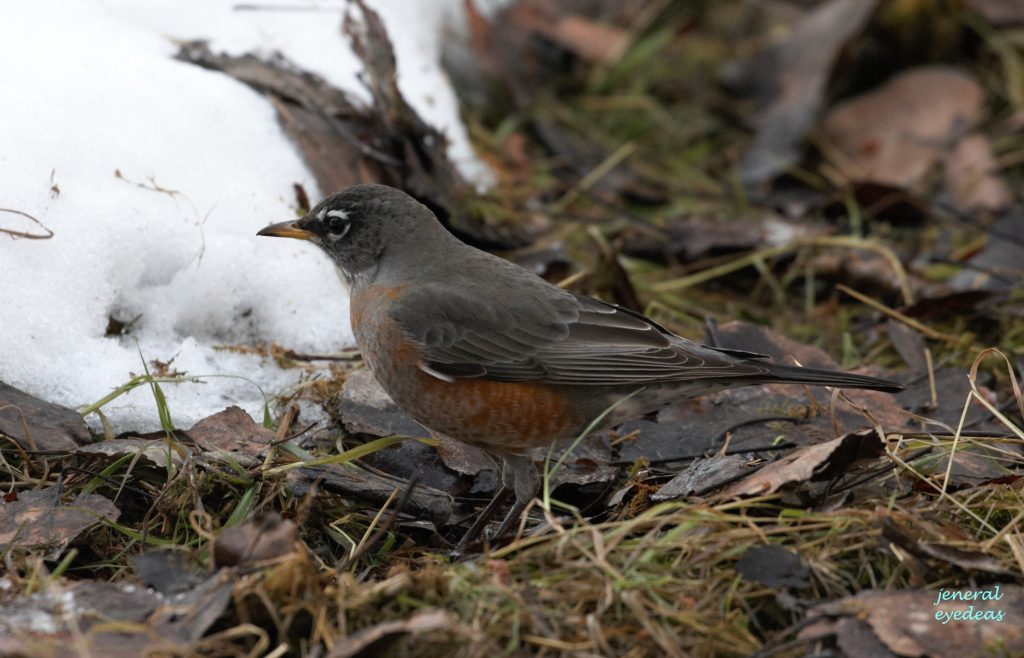
Multiple amateur naturalists and birders I have spoken to shared a small number of American Robins are known to overwinter in my area, it seems American Goldfinches may be starting to as well. Hearing about our familiar orange and yellow feathered friends staying with us over winter was fascinating, actually seeing them forage and flying around in the middle of winter filled me with wonder and glee!
Leave a Reply