A couple weeks ago, my area experienced a cold snap with temperatures falling to about -25 degrees with windchill. Up until the beginning of November, mother nature gifted us beautiful fall weather with temperatures rarely falling below freezing. The sudden blast of cold weather that arrived overnight was the first real sign that winter was here.
The roads were hazardous to drive due to the heavy snowfall that accompanied the cold temperatures. I avoided unnecessary travel and stayed home, but I was not alone. The feathered friends were plenty in my backyard as I made sure my feeders were filled with fresh high fat and protein bird seed.
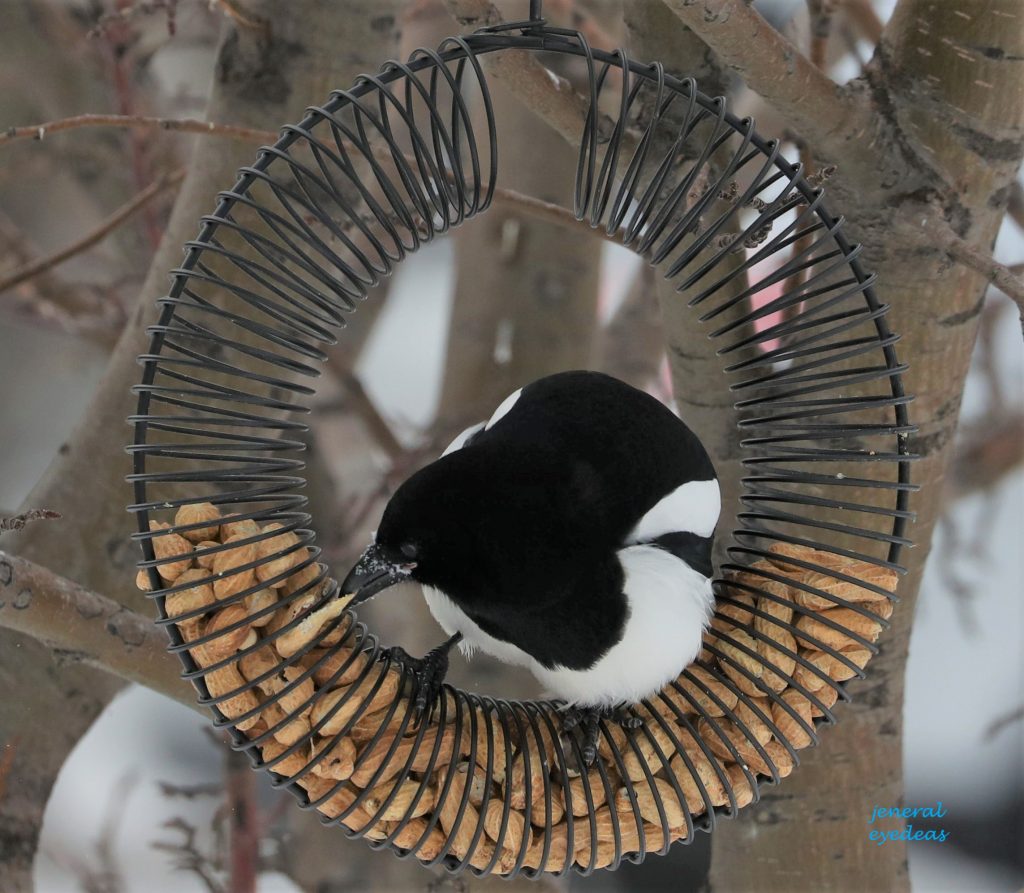
A couple magpies in my neighborhood were regulars at my platform and ring feeder. It almost seemed like they were watching and waiting for me to bring out new bird seed each day. Literally, seconds after I step away from my bird feeders, they would fly to one of the trees in my yard and hop towards their seed of choice – peanuts.
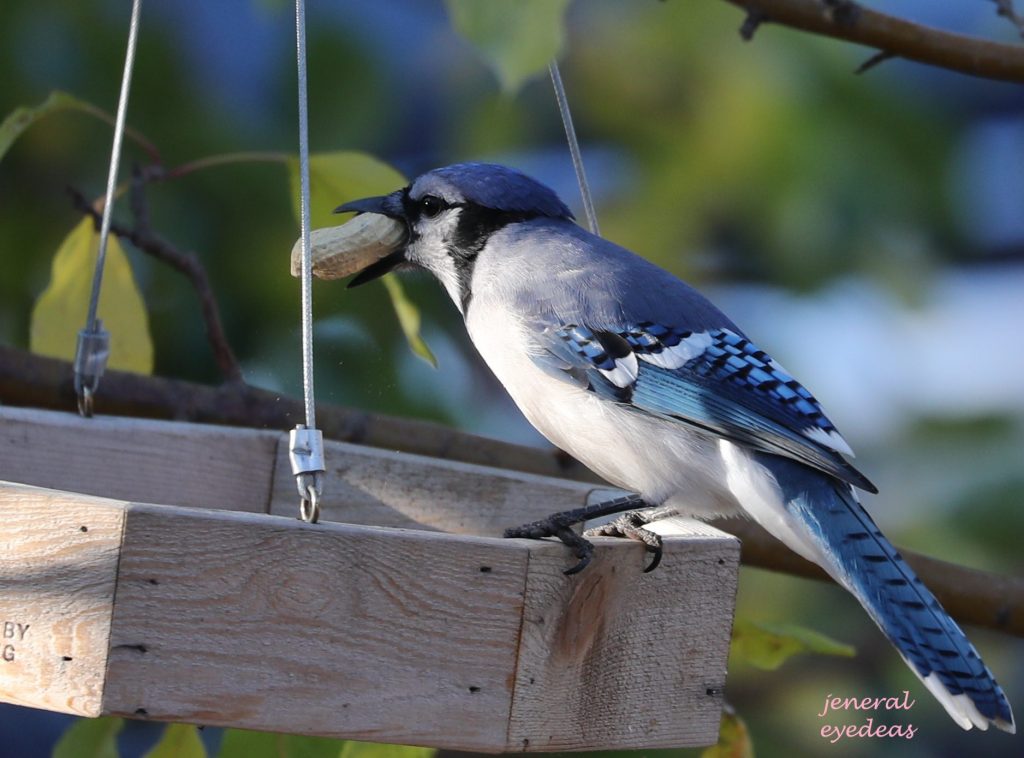
The boisterous Blue Jay regularly visited! They did not arrive as quickly as the magpie yet I would hear their calls (first 15seconds in attached link) in the distance and within a couple minutes, I would see them in my yard. It was almost like they were announcing their planned visit to the feeders! Blue Jays were always a treat to see because of their curious tendencies and beautiful bright blue feathers, even so did you know their feathers aren’t actually blue?! More on this in a future post… Sadly, I was not able to capture any photos that showcased this rambunctious corvid’s beauty during the cold snap. Digging through my photos, I found a shot from earlier in the season of a Blue Jay greedily taking the largest peanut it could find in my feeder!
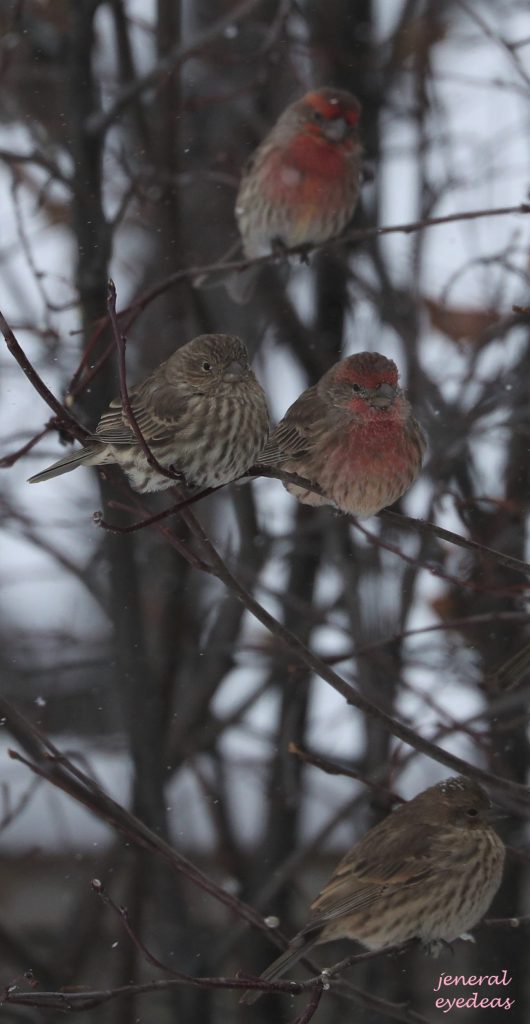
Corvids were not the only visitors to my yard! House Finches, who love black oil bird seed, arrived at my feeders a few minutes after the sun was above the horizon. They announced their arrival with distinct chittering and cheep sounds. It seems the cold weather was particularly hard on these bright colored cheery birds as they stayed perched in a nearby tree for most of the day resting or waiting for their turn at the feeder with their feathers puffed out.
Winter can be a difficult time for our feathered friends due to the significant reduction in the availability of food sources. Although high quality bird seed can be expensive, I feel it is important to help birds survive the winter as a custodian of this planet. In a future post, I will share some tips on feeding birds in the winter including what types of seeds to use and how to prevent the notorious house sparrow from taking over your feeders, and burning through your bird seed budget.
Leave a Reply